Helping Children, Adults & Families Grow, Communicate & Thrive.
Quick answer: Communication development includes receptive language (understanding), expressive language (speaking), speech sound production, and pragmatics (social use of language). These skills typically emerge in a predictable sequence from birth to age 5, and parents can meaningfully accelerate a child’s progress using evidence-based strategies such as following the child’s lead, expanding their language, and reading together daily.
Every child’s first words are a milestone parents wait for eagerly — but child communication development begins long before that first “mama” or “dada.” From the moment a baby coos in response to a caregiver’s voice, a complex, interactive process is already underway. Understanding speech and language milestones, recognising early red flags, and knowing which parent strategies are backed by research gives families one of the most powerful tools available for supporting a child’s growth.
Communication development is broader than speech alone. It includes four connected domains:
These domains develop together, not in isolation. This is why a child who seems to be “just a late talker” may actually benefit from a broader look at how they engage, understand, and interact — not speech alone.
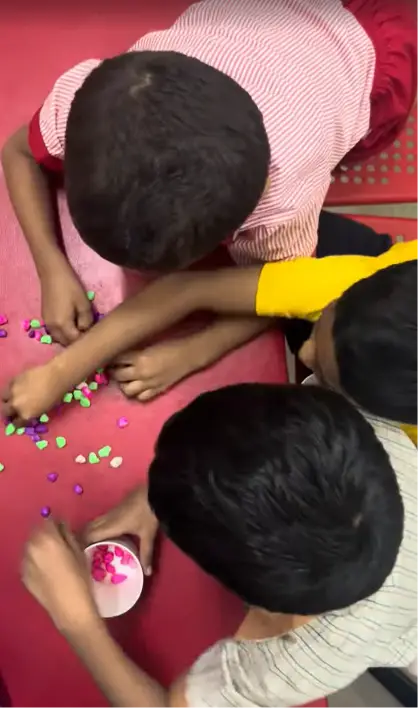
Every child develops at their own pace, but general patterns help parents know what to expect and when to seek support (American Speech-Language-Hearing Association, n.d.):
Age | Typical Speech & Language Milestones |
|---|---|
0–6 months | Coos, responds to voices, begins babbling |
6–12 months | Babbles with consonant sounds, responds to name, uses gestures like waving |
12–18 months | Says first words, points to request or show, understands simple instructions |
18–24 months | Vocabulary of 50+ words, begins combining two words (“more milk”) |
2–3 years | Uses short sentences, asks simple questions, vocabulary expands rapidly |
3–5 years | Tells simple stories, uses grammar more consistently, engages in back-and-forth conversation |
These ranges are guidelines, not deadlines. Still, research consistently shows that early identification and early intervention for speech delay lead to significantly better long-term outcomes (Rossetti, 2001), which is why “wait and see” is rarely the recommended approach when a parent has genuine concerns.
One of the most influential findings in early language research comes from Hart and Risley’s (1995) landmark study on the early vocabulary gap, which showed that the quantity and quality of language children hear in their early years has a measurable impact on later vocabulary and academic outcomes. While later research has refined these findings, the core message has held up: everyday parent-child interaction is a primary driver of language growth — not formal instruction or therapy time alone.
This is echoed in decades of research on parent-implemented language intervention. A meta-analysis by Roberts and Kaiser (2011) found that when parents were coached in specific, responsive communication strategies, their children showed meaningful gains in both expressive and receptive language — gains often comparable to clinician-only intervention. In short: parents can be active, effective agents of speech and language development, particularly when guided by evidence-based techniques.
The good news: many of the most effective speech therapy strategies for parents are simple and fit naturally into everyday routines — mealtimes, bath time, play, and car rides.
Join in on what your child is already interested in, rather than redirecting their attention. Following a child’s interest has been shown to increase engagement and communication attempts (Girolametto & Weitzman, 2002).
Position yourself at your child’s eye level. This increases joint attention — a foundational skill linked to later language development — and helps your child see your mouth movements and expressions.
Both expose children to rich, contextually relevant language input without requiring a response.
If your child says “Dog run,” avoid correcting with “No, say ‘the dog is running.'” Instead, expand: “Yes! The dog is running fast!” This technique — recasting — models correct grammar without making the child feel corrected, and is well-supported in the language intervention literature (Camarata & Nelson, 2006).
After asking a question, silently count to five before responding. Giving children extra processing time increases the frequency and complexity of their responses — a simple but powerful speech delay intervention technique.
Shared book reading is one of the most well-researched, evidence-based tools for language development (Mol & Bus, 2011). Pausing to ask open-ended questions (“What do you think happens next?”) builds vocabulary and narrative skills more effectively than labeling pictures alone.
The American Academy of Pediatrics (2016) recommends minimizing passive screen exposure in early childhood, since screen time often displaces the reciprocal, back-and-forth interaction that drives language growth.
While variation in development is normal, certain signs warrant an evaluation by a speech-language pathologist (SLP):
Early evaluation does not mean early “labeling” — it means early support, at the age when the brain’s neuroplasticity offers the greatest opportunity for growth (Rossetti, 2001).
Note: This article is for general educational purposes and does not replace individualized assessment or advice from a qualified speech-language pathologist. If you have concerns about your child’s communication development, consult a licensed professional for a personalized evaluation.
Providing an integrated framework of speech, sensory, occupational, and psychological clinical care to empower families and foster long-term developmental growth
Copyright © 2026 BE4 Therapy Clinic. All Rights Reserved. Developed by Web Creators India