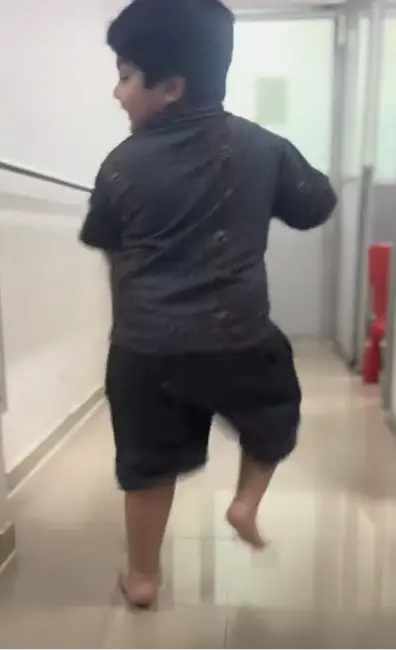
A Parent’s Guide to Gross Motor Skills, Fine Motor Skills, and Why “Just Playing” Matters More Than You Think
Movement and physical skills — gross motor skills (running, jumping, balancing) and fine motor skills (handwriting, buttoning, using cutlery) — are the foundation for a child’s everyday participation at home, school, and play. Research links strong motor development to school readiness, academic performance, social confidence, and independence in daily activities. Occupational therapists assess and support these skills when a child struggles to keep up with peers.
Why This Matters to Every Parent
When we think about a child’s development, we often focus on milestones we can tick off a list — first steps, first words, first day at school. But underneath many of the everyday things our children do — buttoning a shirt, sitting through a meal, climbing onto a school bus, writing their name — lies a quieter, less-talked-about foundation: movement.
Movement isn’t just about sport or fitness. In child development, physical and motor skills are the building blocks that allow a child to participate — to join in, keep up, and feel capable in the everyday moments of home, school, and play. When we understand this connection, “just playing” starts to look a lot more important.
What Are Gross Motor Skills and Fine Motor Skills?
Physical skills in childhood are usually grouped into two broad categories:
Gross motor skills — the big movements that use large muscle groups: running, jumping, climbing, balancing, throwing and catching.
Fine motor skills — the smaller, precise movements involving the hands and fingers: holding a pencil, using scissors, doing up buttons, using cutlery.
Both categories work together, and both are essential for what occupational therapists call “occupational participation” — a child’s ability to engage meaningfully in the roles and routines of daily life, whether that’s playing at recess, getting dressed independently, or sitting to complete homework (Case-Smith & O’Brien, 2015).
The Everyday Connection: How Motor Skills Show Up in Daily Life
Everyday Task
Underlying Motor/Physical Skill
Sitting upright at the dinner table or desk
Core strength, postural control
Getting dressed independently
Fine motor coordination, bilateral integration (using both sides of the body together)
Writing and colouring
Fine motor precision, hand strength, visual-motor integration
Playing tag or catching a ball
Gross motor coordination, motor planning (praxis)
Climbing stairs, playground equipment
Balance, motor planning, body awareness
Cutting food, using cutlery
Bilateral hand use, grip strength
This is why a child who struggles with movement often doesn’t struggle in isolation — the difficulty tends to ripple outward, showing up as trouble keeping up at recess, frustration during handwriting tasks, or avoidance of group activities (Missiuna et al., 2006).
Why Early Movement Experiences Matter: The Research
Research consistently shows that motor development in early childhood is closely tied to broader outcomes — not just physical, but cognitive, social, and emotional.
Motor skills and cognitive development are linked. Motor and cognitive systems develop in tandem during early childhood, and early motor competence has been shown to predict later academic performance, including reading and mathematics skills (Cameron et al., 2012; Piek et al., 2008).
Movement builds self-esteem and social participation. Children with strong motor skills are more likely to engage confidently in group play, which supports the development of friendships and social skills. Conversely, children with motor difficulties are at higher risk of social withdrawal and reduced participation in physical activity (Cairney et al., 2010).
Fine motor skills predict school readiness. Fine motor proficiency at kindergarten entry has been found to be a strong predictor of later academic achievement — even more so in some studies than early reading or attention skills (Grissmer et al., 2010).
Motor coordination difficulties often go unnoticed. Developmental Coordination Disorder (DCD), which affects motor skill acquisition, is estimated to affect approximately 5–6% of school-aged children, yet is frequently under-identified because affected children are often mislabelled as “clumsy,” “lazy,” or “unmotivated” rather than recognised as needing support (Blank et al., 2019, International Clinical Practice Recommendations on DCD).
When to Seek Support from a Pediatric Occupational Therapist
Every child develops at their own pace, and variation is normal. However, evidence-based screening guidelines suggest it may be worth a professional evaluation if a child:
Avoids physical activities that peers enjoy
Shows marked difficulty with tasks like buttoning, cutting, or handwriting well past the expected age range
Appears clumsy in a way that affects daily function, not just occasional accidents
Shows frustration, low confidence, or social withdrawal connected to physical tasks
Early identification and intervention are strongly associated with better long-term outcomes, both functionally and emotionally (Blank et al., 2019).
Frequently Asked Questions
What is the difference between gross motor skills and fine motor skills? Gross motor skills involve large muscle groups and whole-body movement — running, jumping, climbing, and balancing. Fine motor skills involve small, precise hand and finger movements — writing, buttoning, cutting, and using cutlery. Both develop together and both support a child’s everyday participation.
How do motor skills affect a child’s learning? Motor and cognitive development are closely linked in early childhood. Research shows that fine motor proficiency at school entry predicts later academic achievement, and early motor competence is associated with stronger reading and math outcomes later on (Cameron et al., 2012; Grissmer et al., 2010).
What is Developmental Coordination Disorder (DCD)? DCD is a condition affecting motor skill acquisition and coordination, estimated to affect 5–6% of school-aged children. It is often under-identified because affected children are mistaken for being clumsy, unmotivated, or careless rather than recognised as needing support (Blank et al., 2019).
When should I be concerned about my child’s motor development? Consider a professional evaluation if your child avoids physical activities peers enjoy, struggles significantly with age-expected fine motor tasks, seems unusually clumsy in ways that affect daily function, or shows frustration and social withdrawal linked to physical tasks.
Can motor skills be improved with practice and therapy? Yes. Motor skills are highly responsive to opportunity, practice, and targeted intervention. Occupational therapy uses structured, play-based approaches to build strength, coordination, and confidence, supporting a child’s participation in daily life.
The Takeaway
Movement is not separate from learning, confidence, or connection — it’s woven into all of it. When we understand physical skills as the quiet infrastructure of everyday participation, it becomes clear why time spent climbing, running, building, and playing is never “just” play. It’s how children learn to belong in — and move confidently through — their everyday world.
References
Cairney, J., Hay, J. A., Faught, B. E., & Hawes, R. (2010). Developmental coordination disorder and overweight and obesity in children aged 9–14 y. International Journal of Obesity, 29(4), 369–372.
Cameron, C. E., Brock, L. L., Murrah, W. M., Bell, L. H., Worzalla, S. L., Grissmer, D., & Morrison, F. J. (2012). Fine motor skills and executive function both contribute to kindergarten achievement. Child Development, 83(4), 1229–1244.
Case-Smith, J., & O’Brien, J. C. (2015). Occupational Therapy for Children and Adolescents (7th ed.). Elsevier Mosby.
Grissmer, D., Grimm, K. J., Aiyer, S. M., Murrah, W. M., & Steele, J. S. (2010). Fine motor skills and early comprehension of the world: Two new school readiness indicators. Developmental Psychology, 46(5), 1008–1017.
Missiuna, C., Moll, S., King, S., King, G., & Law, M. (2006). A trajectory of troubles: Parents’ impressions of the impact of developmental coordination disorder. Physical & Occupational Therapy in Pediatrics, 27(1), 81–101.
Piek, J. P., Dawson, L., Smith, L. M., & Gasson, N. (2008). The role of early fine and gross motor development on later motor and cognitive ability. Human Movement Science, 27(5), 668–681.
Blank, R., Barnett, A. L., Cairney, J., Green, D., Kirby, A., Polatajko, H., Rosenblum, S., Smits-Engelsman, B., Sugden, D., Wilson, P., & Vinçon, S. (2019). International clinical practice recommendations on the definition, diagnosis, assessment, intervention, and psychosocial aspects of developmental coordination disorder. Developmental Medicine & Child Neurology, 61(3), 242–285.
Disclaimer: This article is intended for general parent education and awareness. It is not a substitute for individual clinical assessment. If you have concerns about your child’s motor development, please consult a qualified paediatric occupational therapist or your child’s paediatrician.